
To Hire or to Do It Yourself: The Interior Painting Dilemma
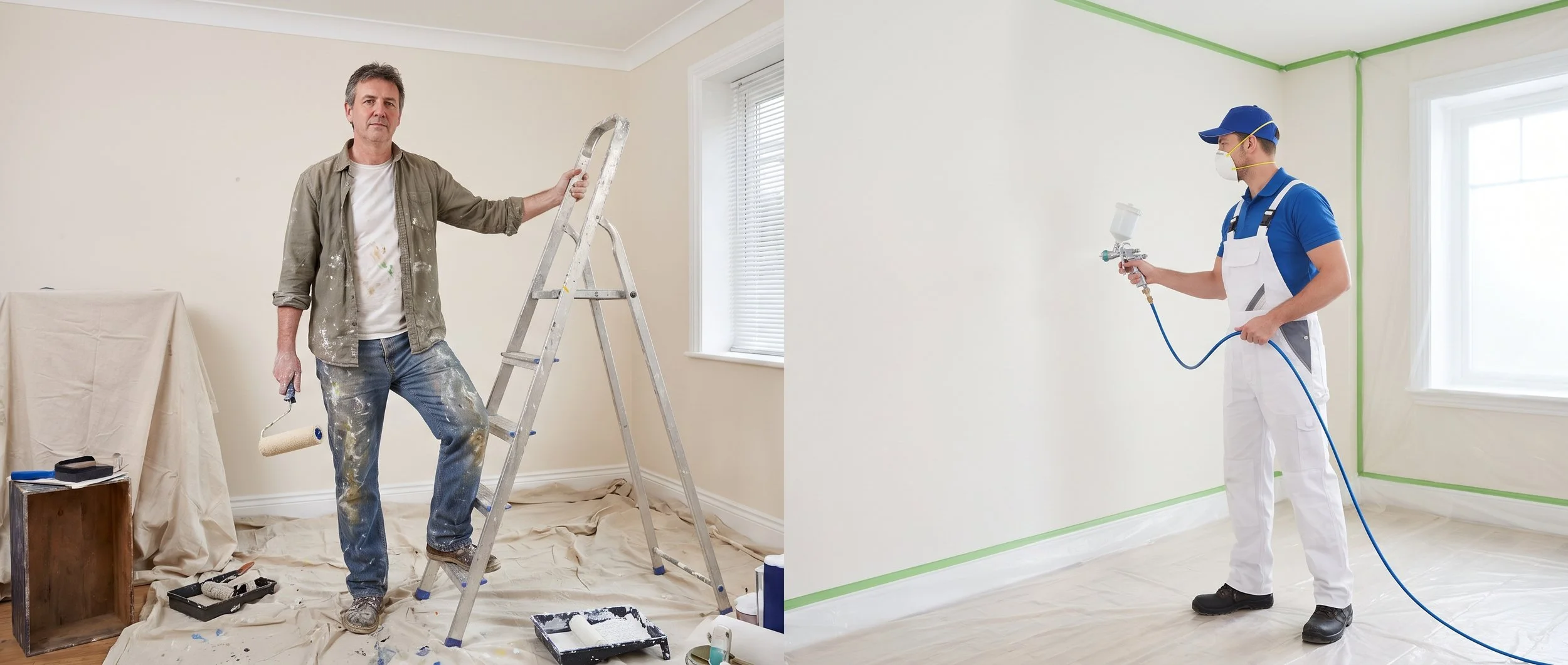
The Core Question
The hard truth: If you want the best balance of speed, quality, and convenience, hiring an interior painter is usually the better choice, especially for larger rooms, detailed work, or tight timelines. Doing it yourself can save money, but it only makes sense if you have the time, patience, and skill to handle the prep work and finish cleanly.
The decision of whether to put down a brush or call in the pros is not always straightforward. Your answer will be dictated by such factors as your budget, how much time you have on hand, the size of the room and your own skill set, not to mention the quality of finish you are after. For the most part it is a matter of tradeoffs: do it yourself to keep costs down, or engage professionals for the sake of saving time and avoiding stress. We have laid out the differences in cost, effort and quality below to see which path is the sensible one.
What Goes Into an Interior Paint Job
There is more to painting a room than slapping color on a wall. A proper job starts with preparing the surface; you must clean, caulk any gaps, sand down rough patches and fill in holes. Skip this and even the priciest paint will appear uneven at best.
Then there is the matter of putting down drop cloths and taping off the trim, fixtures and furniture. The painter has to cut in the corners and edges before taking a roller to the expanse of the wall. Expect to put on several coats for consistency, and factor in the final cleanup and touch-ups to put the project to bed.
Is the DIY Route Cheaper?
On paper, yes. By forking over no labor fees you can save a good deal of money, particularly when re-painting multiple rooms. But you are still on the hook for all the supplies: primer, paint, trays, ladders, brushes and the like.
And there are hidden expenses to consider. Miscalculate the coverage and you are back at the store for more paint; make a mistake and you have to put in the work to fix it. While the initial outlay is lower, DIY does not always prove cheaper in the end if rework is required.
Why You Might Do It Yourself
The appeal of handling the work is obvious: it is easier on the wallet. For those with a tight budget the savings are considerable. It also puts you in charge of the timetable. There is no need to coordinate with a contractor; you can tackle a room here and there on a weekend or put things on hold as you see fit.
For a closet or a low-traffic bedroom, it is a practical option. If you have some experience under your belt you may find the task quite manageable.
The Flip Side of DIY
Time is the chief drawback. A job that seems like it should take a day can easily stretch into two or three once you account for prep and drying. It is hard work, too; the ladder climbing and constant bending and reaching will wear you down.
Without practice you will likely struggle to get the kind of crisp lines and uniformity a pro would put in place. And while an error might seem minor in the moment, it is hard to miss once the paint has set.
The Case for Hiring Pros
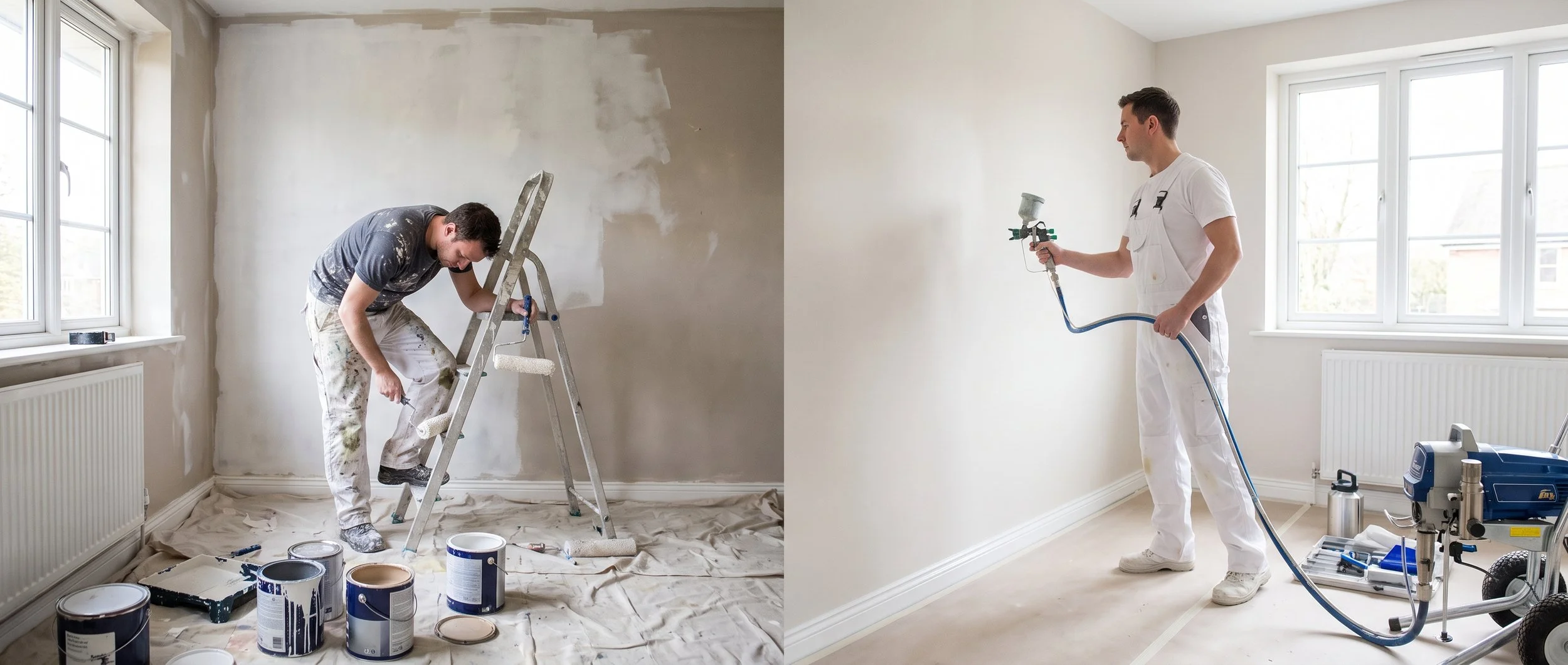
A professional crew will put most projects behind them in far less time. They have the workflow and know-how to get through the prep and painting without fuss.
You will generally see a superior result from their hands, with smooth walls and sharp edges. In rooms where the look is paramount, that matters. Then there is the convenience of having someone else bring the materials and deal with the mess. Many homeowners are happy to pay for that peace of mind.
When Hiring Has Its Drawbacks
Labor is expensive, so the upfront price tag can be hard to swallow, making it tough to warrant for a small job. You are at the mercy of the contractor’s schedule and have to plan around him.
Quality is not guaranteed across the board, so vetting is important. And of course, once you hand the reins over to a company you are ceding some control of the process. There is a certain frustration in trying to micromanage every aspect of a project on your own.
When DIY is the Way to Go
For small, straightforward projects, taking matters into your own hands is perfectly sensible. It is a sound option for an individual room when you are watching your budget. You will also find it works well if the walls are already in good shape and you have the time to put in the proper prep work; without the need for extensive repairs, the task is far more realistic.
Then there is the matter of finish. A spare or utility room does not demand the same exacting standards as a formal entryway or dining room, so if you do not require a highly detailed look, DIY is usually best.
Reasons to Hire Painters
With multiple rooms or a large home, the scale can be enough to make a DIY approach overwhelming. In those cases, hiring is often preferable. Professionals should be called in for high ceilings, trim and other surfaces where precision is non-negotiable, as they have the equipment and skill to handle it.
If you want to avoid the hassle or need the job done in short order, a pro is the safer bet for a smooth, polished outcome.
Making Your Decision
Put your budget up against your time. If convenience is at a premium and your schedule is full, the expense of hiring out is justified. But if saving money is the priority, then do it yourself.
Have some candour about your abilities. While painting seems like an easy thing to do, a good result calls for a steady hand and consistency. The scope of the work makes all the difference too; a full-house repaint is another matter entirely from a small bedroom.
Things to Consider Before You Start
Run through these questions with yourself:
How much time can I truly put in?
What is the state of the rooms and how much prep is involved?
Do I have the necessary tools?
Will any errors stand out?
An honest answer will keep you from underestimating what is required.
Selecting a Painter
Should you go the route of hiring, price should not be your only metric. Check past work and reviews for an indication of reliability. Make sure to get a written estimate for easy comparison and clarify the timeline, materials and touch-up policy before anything gets underway. Ask about their prep work since that is what determines the quality of the finish. Any competent painter will be open to explaining the process in detail.
The Bottom Line
When the room is unpretentious and funds are limited, DIY interior painting is the smart move. But if the space is of some importance to the home’s overall appearance or is simply too large and detailed to tackle alone, you will likely find it worth the cost to bring in painters.
FAQ
Is it cheaper to do it yourself? As a rule, yes. You save on labour, though you must factor in the cost of supplies and the possibility of rework if things go awry.
How long will it take? A DIYer might spend a couple of days on a small room. Larger undertakings take longer, whereas a professional crew will put it to bed more quickly.
What do I need for the job? You will need paint and primer, rollers and brushes, trays, drop cloths and painter’s tape. Ladders or extension poles may be in order as well.
Is it worth hiring someone? Many homeowners would say so for a large or intricate job. It is a good way to ensure a fast turnaround with less stress and a neater finish.
What separates a pro job from the rest? It comes down to even coverage, clean edges and thorough prep and cleanup.
