A Custom Approach to High-ROI LBI Rental Properties
A custom-built LBI rental property can deliver strong ROI when it is designed for the local market, built for durability, and tailored to attract repeat seasonal renters. With the right planning, you can create a property that stands out, books consistently, and holds long-term value.
In a vacation market as competitive as this one, standing out is not a matter of size or style alone. You have to be able to put together a home that has the right mix of guest-ready luxury, smart function and the sort of coastal durability that visitors come to expect from a shore house.
Whether you are renovating a beach house or putting in the groundwork for a new custom build, the projects that do well on the island are ones that balance lifestyle with return on investment. Make the right calls on design and you will find you can justify higher weekly rates while keeping maintenance to a minimum.
The Case for LBI as a Vacation Rental Market
You will find plenty of families and multi-generational groups on Long Beach Island who are happy to pay top dollar for a home in the right location with the right appointments. It is not like some generic vacation market; LBI has its own character, a blend of old-time Jersey Shore and a more refined way of living. What performs best are the properties that are fresh and luxurious without being impractical.
Those looking to build an LBI rental property would do well to consider what the modern vacationer wants. These days, having basic accommodations and a path to the beach isn’t enough. Today’s guests want open spaces to gather, a proper kitchen, en suite bedrooms and room to entertain outside. How you design the home has a direct bearing on what it will earn.
Get the Site and Program Right First
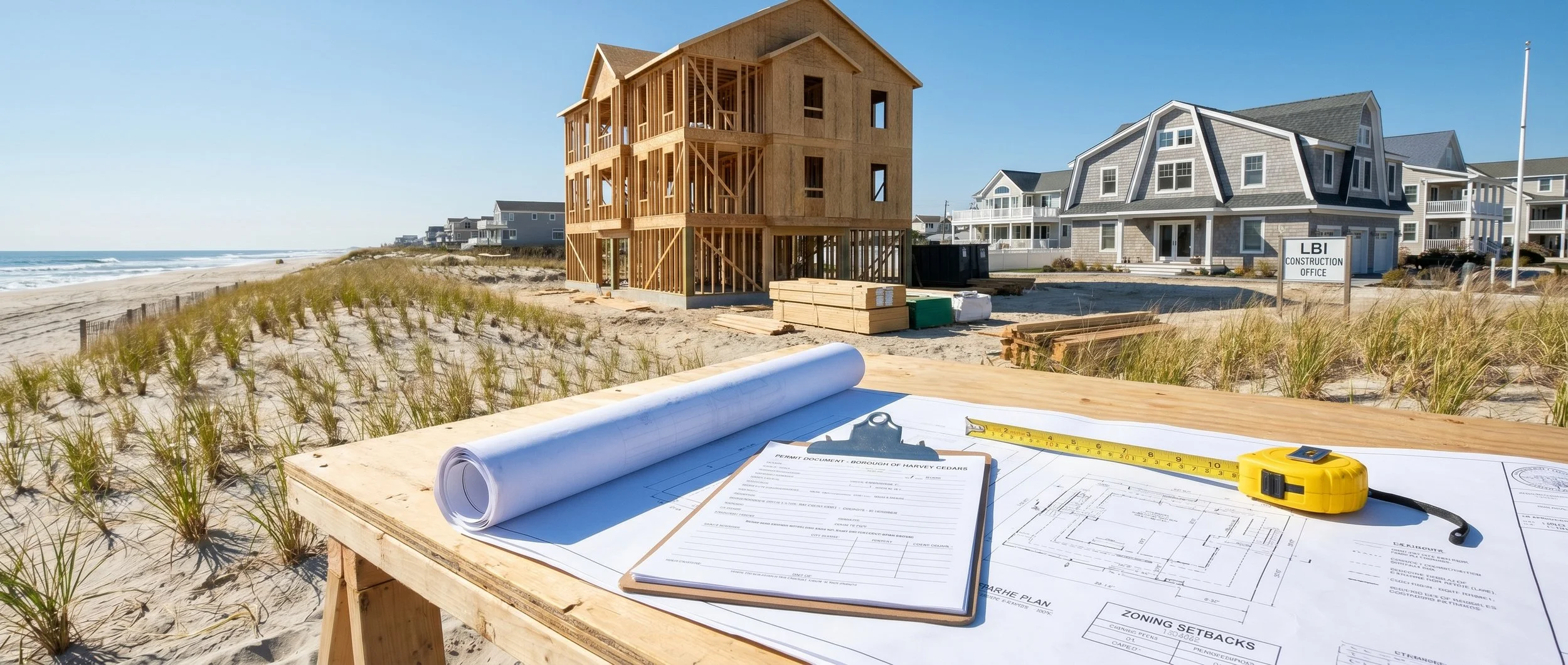
Before you break ground, you need to have a clear read on the lot, the zoning, elevation and what the rental potential is. On the island, your hands can be tied by flood zones, setbacks and local regulations. An experienced builder will know the ins and outs of the permitting process and can save you from the expense of having to redesign later.
Your floor plan should be driven by the type of renter you are after. Are they large families? Affluent seasonal types? If you are going to build an LBI rental property for big groups, you might put in dual living areas and extra bunk rooms. For a high-end crowd you would be better off with private suites and a chef’s kitchen. The most profitable homes aren’t necessarily the largest, just the ones that fit the demand.
Don’t Underestimate the Coast
Homeowners often make the error of going all in on looks and not giving enough weight to what the environment will do to a house. Between the salt air, the wind and the sand, you have some unique challenges to contend with. Your materials and systems have to be as resilient as they are attractive if you want to protect your investment.
Here is what we mean when we say to build an LBI rental property with the coast in mind:
Use fiber cement or composites for the exterior
Go with corrosion-resistant hardware
Specify impact-rated windows and doors where it makes sense
Insure your foundation is elevated and your design is flood-conscious
Choose decking and railings that can take the salt
Opt for wall assemblies and insulation that resist moisture
It is less work down the road and means a better experience for your tenants.
Let the Floor Plan Work for You
The layout is a big part of what gives a rental its value. People want to feel at ease in a place that is spacious and easy to move around in. Often it is the fact that you can get several generations under one roof that makes an LBI home so appealing.
When you build an LBI rental property, there are certain features that add value:
Open Gathering Spaces
Put the kitchen, dining and living together so you have a hub for the family. Add in a large island, some natural light and wide paths and you have a space where people don’t feel hemmed in.
En Suite Bedrooms
For a vacationer, privacy is what sells. You can command higher rates by offering the kind of hotel-style comfort that comes with a bedroom and private bath.
Flexible Sleeping Arrangements
For families with children, well-thought-out sleeping spaces are a must. Bunk or bonus rooms let you put more guests under one roof without having to skimp on the design.
Separate Owner Storage
Should you be using the property for part of the year, having your own storage is a convenience. It keeps your personal effects and supplies safe and makes for an easier turnover when you are not there.
Functional Entry and Laundry Zones
When you live on the beach you have to contend with sand, wet towels and gear, and the foot traffic that goes with it. Mudrooms, easy-clean surfaces and roomy laundry areas are what keep the place in order.
Outdoor Living Is a Revenue Driver
Guests on Long Beach Island want to be outside as much as they can, particularly in the height of summer. Here, outdoor space is central to the value proposition, not an afterthought. Put in a good design and you will see the booking appeal go up.
To build an LBI rental property with staying power, make an investment in things like:
Covered porches to get out of the rain and sun
Rooftop decks where you can take in the water or a sunset
An outdoor shower for after a day at the beach
A built-in spot for grilling and dining
Durable, coastal-grade pieces for your lounge area
Ground-level space for games, storage or to gather in the shade
It is a way to add to the home’s usable square footage and give renters the vacation feel they expect from a top-shelf shore home.
Luxury Features That Increase Rental Value
Luxury should be applied with some thought, not in excess, if you want to build an LBI rental property with real upside. You do not get the same return on every upgrade; you are looking for features that are visually appealing and put the guest at ease so you can price accordingly.
What tends to offer the best ROI:
A chef’s kitchen with a large island and fine finishes
A primary suite with a spa-like quality
Modern HVAC and smart climate control
Custom built-ins for storage
Multiple beverage or secondary kitchen stations
Top tier lighting and fixtures
An elevator, if the home has more than one level
Such details put you in a better position to compete in the upper end of the market.
Renovation vs. New Custom Construction
There is often a debate among LBI owners over whether to put money into an existing home or start fresh. It comes down to the site, the structure and what you want to achieve in the long run.
If the bones of the house are good and the location is right, a renovation can be the way to go. But if the home is old, too small or hard to bring up to code, new construction is usually the wiser move. For maximum income potential, a custom build gives you the freedom to work in modern building science and coastal resilience from day one.
Why Local Experience Matters
You are not building inland here. From flood regulations to the permits you need to navigate, local knowledge is essential. A builder who knows the island will steer you clear of pitfalls and select materials that can handle the coast.
The right team will look beyond just the quality of the build to how the home will perform as an investment and hold up to rental wear and tear.
A Smart Coastal Investment Begins with Smart Design
The properties on Long Beach Island that do well are ones with a sense of purpose. They are made to be durable yet effortless for the guest and have the right look for the shore market.
If you are set on building an LBI rental property for a strong ROI, you have to understand the local environment and what a vacationer values. Whether it is the floor plan or the luxury amenities, each decision has financial and practical implications. With a well-informed approach and the right builder, your project becomes more than a beach house; it is a high-performing asset with lasting value.