
What to Know About Home Building in Manasquan
Building a new house in Manasquan is an exercise in planning and permitting, one that must account for the borough’s coastal environment, zoning and the demands of long-term upkeep. To do it right, you want a local home builder on your side; someone who is well versed in Manasquan building codes, FEMA flood mandates and the kind of weather the Jersey Shore throws at you.
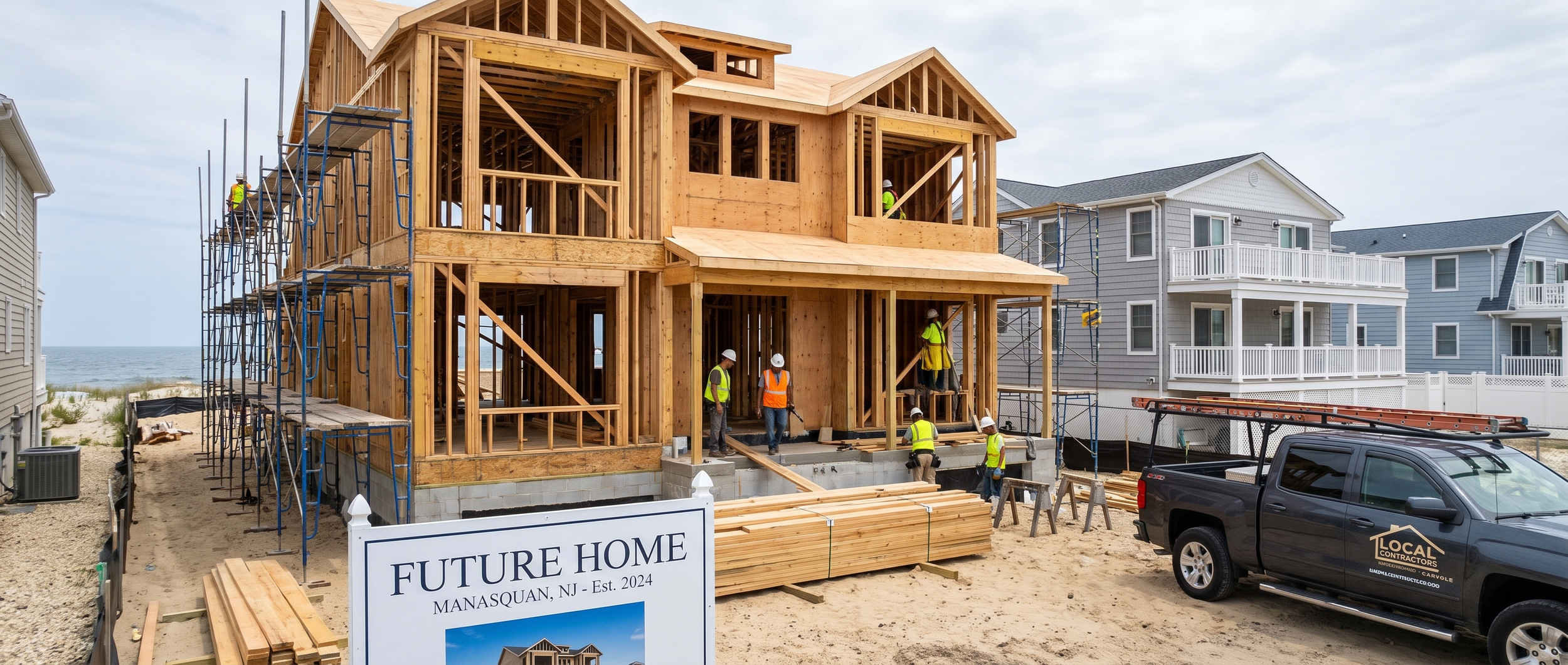
he Manasquan Difference
As a small Monmouth County community on the coast, Manasquan presents its own set of variables for any new project. You have to factor in salt air, wind, lot size and the character of the neighborhood when it comes to design and materials. All of this will be reflected in the approval process as well.
There is more to a home here than square footage. It calls for some forethought on matters of elevation, drainage and energy efficiency. Make the right choices and they will show in the cost, the construction time and the resale value down the road.
The Questions Most Buyers Have
Those considering a build in Manasquan are generally trying to work out a few things: what the true cost is, how to navigate permits and approvals, or whether to put their money into a new structure or an old one. They also want to know which materials can stand up to the coast and how to sidestep expensive errors or delays.
For a buyer wanting modern systems and a custom layout that is code-compliant from day one, a new build is hard to beat. It is also preferable for those who would rather not deal with the immediate repairs an older Jersey Shore property might need.
Who and What Is Involved
The local builder You rely on a local home builder to manage the labor, subcontractors, scheduling and design coordination. An experienced builder in Manasquan and the wider county will already be familiar with the ins and outs of local permitting and utility hookups.
Borough of Manasquan The Borough has a say in the size, height and placement of your new home through its review of zoning, setbacks and lot coverage.
FEMA flood maps These are essential for pinning down elevation requirements and flood-risk zones. The FEMA data will inform your foundation design and insurance costs, and dictate if mechanical systems have to be raised.
NJDEP and local codes Compliance with the New Jersey Department of Environmental Protection (NJDEP) and local building codes is non-negotiable. These rules are in place to protect the coast and mitigate stormwater risk.
Materials and systems Durability is key near the water. You will see a lot of fiber-cement siding, standing seam metal roofs, hurricane-rated windows and closed-cell insulation used for good reason. They add to the long-term value and performance of the home.
Viable Options for Your Build
1. Custom home If you have a clear vision and the budget to match, a custom home gives you control over every finish and feature. It is the way to go for elevated designs or narrow lots with unique views.
2. Semi-custom home Some buyers prefer the semi-custom route. It allows for personalization via an existing plan and some upgrades, but without the added complexity of starting from scratch. A good middle ground for cost and design.
3. Tear-down and rebuild In Manasquan, the value of the lot can easily exceed that of an aging house. A tear-down and rebuild makes sense for owners of older properties that are no longer fit for purpose or too expensive to fix.
4. Elevated coastal build For low-lying or flood-prone parcels, an elevated build is often necessary. This requires structural engineering and strict adherence to elevation rules.
Things to Consider
Cost Expect to pay a premium over inland projects. Coastal homes demand better drainage, sturdier foundations and materials that can take the elements. Add in site work, demolition and permit fees and the budget will reflect it.
Timeline From the first drawing to the final nail, a new home can be many months in the making. In a shore town, storms and the rigors of the permitting process can put a hold on things, so the timeline is something to keep in mind for financing and housing arrangements.
Permits Before any work starts you will need the green light from the borough and other agencies. Depending on the site, this may mean some revisions to the design before you can break ground. ### Durability You cannot overlook durability in this environment. The wind, moisture and salt air of the coast will wear down inferior materials in short order. By making the right call on your siding, roofing, windows, flashing and fasteners, you are doing much to keep future repair bills in check.
Insurance and flood risk
The property may dictate the need for elevation certificates, wind coverage or flood insurance. It is wise to factor these into the equation from the start since they have a bearing on long-term affordability.
Some Practical Advice for a Better Build
Engage a local architect and builder
There is an advantage to working with a Manasquan builder who can put in the work with local officials and tailor the plans to what the coast demands. An architect who has a feel for Jersey Shore homes will be of service when it comes to layout, curb appeal and elevation.
Put site preparation first
How the home stands up to storm surge, rain and groundwater is a function of good site preparation. You want to see proper grading, drainage and foundation planning.
Go with coastal-ready materials
For the exterior one needs materials that can take the exposure. Fiber-cement for the siding, composite decking for an outdoor area that does not require constant attention, and hurricane-rated windows for peace of mind during a storm.
Design with efficiency in mind
A sensible floor plan does more than cut construction costs; it eliminates wasted space and makes heating, cooling and maintenance easier over the years.
Think about the long haul
In a coastal setting, low-maintenance is often synonymous with saving money. Corrosion-resistant hardware, quality sealants and a more robust roof are all ways to avoid having to make repairs down the road.
Pitfalls to Steer Clear Of
Underestimating what is needed for floods – In Manasquan the rules in the flood zone can be strict, calling for specialized foundation work and elevation. Some owners make the mistake of thinking a standard foundation will do.
Opting for the lowest price – Materials at the bottom of the cost scale tend to give out sooner near the shore, which means you are paying for replacements later.
Not doing your homework on permits – A plan might look fine on paper but not pass building or zoning review. Check your height limits, lot coverage and setbacks beforehand.
Overlooking drainage – This is how you protect the crawl spaces, landscaping and foundation from water intrusion and the structural problems it brings.
Hiring someone without local experience – A contractor who does not know coastal New Jersey construction is likely to miss the finer points. Local knowledge goes a long way for compliance and build quality.
To Build in Manasquan or Buy What Is There?
OptionWho it suitsThe upsideThe downsideNew buildThose wanting modern systems and a custom fitTailored layout with less immediate risk of repairMore legwork on approvals and planningExisting homeBuyers in a hurry to move inCan close fasterCould mean some renovation or flood work is in orderTear-down/rebuildWhen you have a good lot and an old houseMakes better use of the locationDemolition and getting approved is more involved
If the goal is a home suited to the conditions and your own requirements, putting up a new structure is usually the sounder long-term play. An existing home is simpler if time is of the essence, but there may be hidden costs in the repairs.
Frequently Asked Questions
What is the timeline for building in Manasquan? It varies with the weather, site and how complex the design is. Expect a custom coastal project to take its time compared to a run-of-the-mill inland build.
Will I need approval for the flood zone? FEMA maps and the local authorities will set the standards for elevation and construction if the lot is prone to flooding.
Which materials hold up best? You want to resist wind and corrosion. We see fiber-cement siding, engineered trim, impact-resistant windows and composite decking used most often for good reason.
Is it more economical to renovate or put up something new? That is a question of scope and the state of the current home. If you are looking at structural or flood upgrades, a heavy-handed renovation can run you as much as a rebuild.
What should I look for in a builder? Make sure the contractor is licensed and has references from around here. A good one will have a clear process for inspections and scheduling and will not shy away from communication.
Moving Forward
For those intent on building in Manasquan, the place to begin is a feasibility check and site review by a local. It is the best way to get a handle on the budget, zoning and any flood stipulations before any plans are made or demolition starts.
A qualified builder in the area can walk you through the options, from semi-custom to a full rebuild, and help you navigate the permit and material side of things without the usual surprises. If you want a home on the Jersey Shore that is as durable as it is attractive, careful local planning is the way to go.
Contact us:
Email: jonathan@fathersonbuild.com
Call: (609) 489-4996
✤ ✤ ✤
Visit Our Showroom:
455 N Main St. Barnegat, NJ 08005