
What to Know About Home Building in Sea Girt
To build a home in Sea Girt is to plan and put up a structure that works with your budget, the coastal environment and local zoning. You will get the most out of the process by engaging a builder familiar with the Jersey Shore who can navigate the particulars of flood requirements and Sea Girt permits.
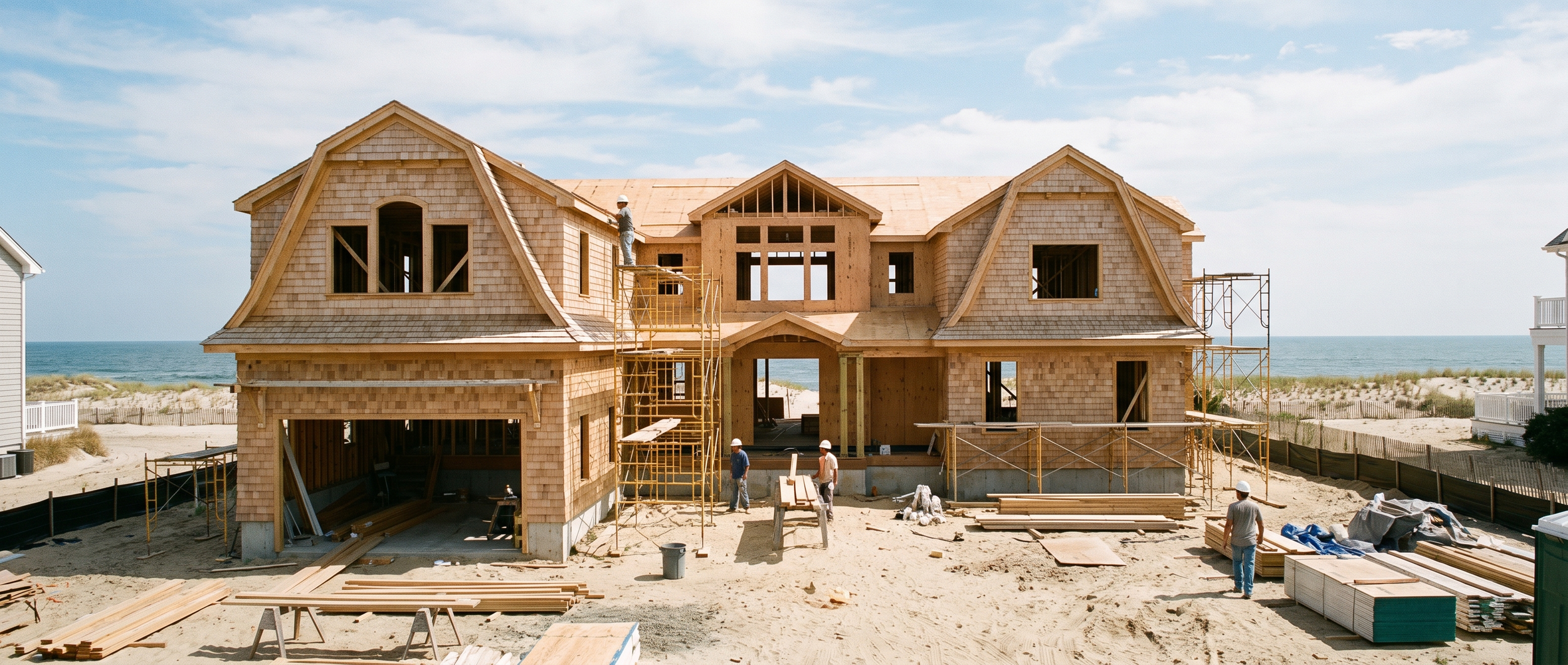
The Complications of Building in Sea Girt
As a small community on the coast of Monmouth County, New Jersey, Sea Girt presents its own set of challenges for any new construction. The town’s regulations, the weather and the land itself have a hand in determining the cost, schedule and design of a project.
A sound floor plan is not enough here. Whether one is putting up a house on an empty lot or replacing an older property, there is the matter of site review, engineering, zoning approval and the like. One has to be mindful of elevation, drainage and how well the home will hold up over time.
In What Way is Sea Girt Unique?
Construction is dictated by the coast
Proximity to the Atlantic Ocean means you are at the mercy of wind, salt air and storms. That exposure has an impact on everything from the siding and windows to the foundation and exterior hardware.
Salt air will take its toll on metal fasteners, railings and finishes.
Foundation work, grading and insurance are all influenced by flood risk.
Proper structural engineering is non-negotiable for roof systems given the wind.
There are local rules to follow
Any new home must be in keeping with New Jersey standards as well as Sea Girt building codes and zoning. A lot may call for additional sign-off on matters of setbacks or floodplain compliance.
Expect to go through the following:
Review by the Sea Girt building department and zoning
Any necessary checks from the state or Monmouth County
FEMA flood zone review
Permits covering demolition, HVAC, electrical, plumbing and the foundation
Your Options for a New Home in Sea Girt
1. Custom home building
For those who wish to have full say in the layout, energy efficiency and finishes, a custom build is the way to go. It is suited to the homeowner who wants long-term value and is not prepared to make concessions on design. The result is a residence that is as unique as the lifestyle and the lot it sits on.
2. Tear-down and rebuild
An older house on a prime lot can be a good candidate for this approach. It is a sensible move in Sea Girt where some of the stock does not measure up to modern demands for space or storm resilience. With a tear-down you can start anew with a contemporary structure while holding onto the location.
3. Semi-custom or pre-designed
There is merit in a semi-custom home which takes a tried-and-true plan and allows for some modification. It offers a degree of flexibility without the unknowns, making for a more efficient process.
Things to Consider Before Breaking Ground
Cost and budget
Expenses in Sea Girt are not uniform; they will be driven by the quality of materials, the size of the home and what the lot requires. Coastal builds tend to run higher due to the need for superior exterior products and site preparation.
Make sure to account for land or teardown costs, design fees, utility hookups, interior work and the various permits and inspections. A healthy contingency fund is also warranted. Once excavation is underway on a shoreline property, one can encounter unanticipated issues with the soil or drainage.
The timeline
Do not be surprised if the schedule stretches out. Complex designs and the time needed for approvals can put a hold on things, as can material lead times and the weather. All of this has a bearing on financing and when you can expect to move in. Owners will find the process to be a series of steps:
site evaluation
architectural design
engineering and approvals
demolition or clearing the site
putting in the foundation and framing
mechanical, electrical and plumbing work
insulation, drywall and other finishes
final inspection to get the certificate of occupancy
Materials and durability
In a coastal setting one must select materials that can stand up to the elements. Good options are fiber cement siding, impact-resistant windows, standing seam or top tier roofing, composite decking, as well as any flashing, fasteners, sealants and insulation that resist corrosion and moisture.
The building materials you put in place have a direct bearing on maintenance and what you will spend on repairs down the road. A quality window is for energy efficiency and noise control; a robust roofing system is there for storm resistance and to manage moisture.
How to Choose the Right Builder in Sea Girt
Construction skill is only part of the equation in Sea Girt; local knowledge is just as important. You want a builder with a track record in coastal home construction and an understanding of New Jersey codes, flood elevation rules and permit coordination. They should also be adept at project management and working with good subcontractors for masonry, HVAC, and the like.
Put them to the test by asking for some examples of homes they have put up in Monmouth County or the surrounding shore towns. A capable builder will be able to talk you through their approach to planning, budgeting, change orders and inspections.
Common Mistakes to Avoid
Overlooking lot conditions.
A hasty site evaluation can lead to costly surprises. Some lots demand more in the way of grading, drainage or foundation work than one might think.
Underestimating the permitting side of things.
Approvals take time. If you rush it, you risk delays and having to do redesign work.
Going for looks alone.
Near the coast a pretty finish does not cut it if it cannot withstand salt, wind and moisture.
Failing to plan for upkeep.
Coastal properties require more attention. Regular checks on the exterior trim, railings, seals and roof are a must.
Hiring someone without local experience.
A builder unfamiliar with Sea Girt or the Jersey Shore may not be on top of the code and site issues that matter here.
What Is the Best Approach?
Most buyers are well served by a local custom builder who has coastal experience and communicates clearly. It is the best way to stay on budget and sidestep delays. For those wanting a quick route, semi-custom is an option. If you have an excellent lot but an old house, a teardown and rebuild can be the most value. Custom building gives you the most control.
FAQs About Home Building in Sea Girt
How long is the timeline?
There is no set answer as it comes down to the design, the weather, material availability and when permits come through. Several months is common from start to finish, with larger custom jobs running longer.
Is special flood protection necessary?
If your lot is in or close to a flood zone, then yes. You will need to give serious thought to elevation, the foundation, drainage and insurance.
Does a custom home make sense?
It does if you want something that suits your lifestyle and property. While it is pricier than a standard build, the fit and function are usually better.
What questions should I put to a builder?
Find out about their history in Sea Girt and nearby towns, how they handle permits and warranties, and what kind of coastal materials they use.
Is it possible to build on a small lot?
You can, but you have to work within zoning, setbacks and design limitations. An architect or builder in the know will tell you what is feasible.
Next Step
Start with a site evaluation and a builder who is familiar with the way things are done in Sea Girt. The right team will see you through the permit process and help you put together a home with durable materials that is suited to the coast and your needs for the long term.
Contact us:
Email: jonathan@fathersonbuild.com
Call: (609) 489-4996
✤ ✤ ✤
Visit Our Barnegat Showroom:
455 N Main St. Barnegat, NJ 08005
Visit Our Manasquan Location:
2677 NJ 70, Manasquan NJ 08736 Suite 1B