
Home Building in Spring Lake: What You Should Know
To build a home in Spring Lake is to plan, permit and put up a structure that is in keeping with local zoning and site conditions as well as your budget. The prudent thing to do before you commit to building here is to have the lot appraised, make sure you are in line with township requirements and engage a builder who has a working knowledge of coastal construction and how to get approvals in this town.
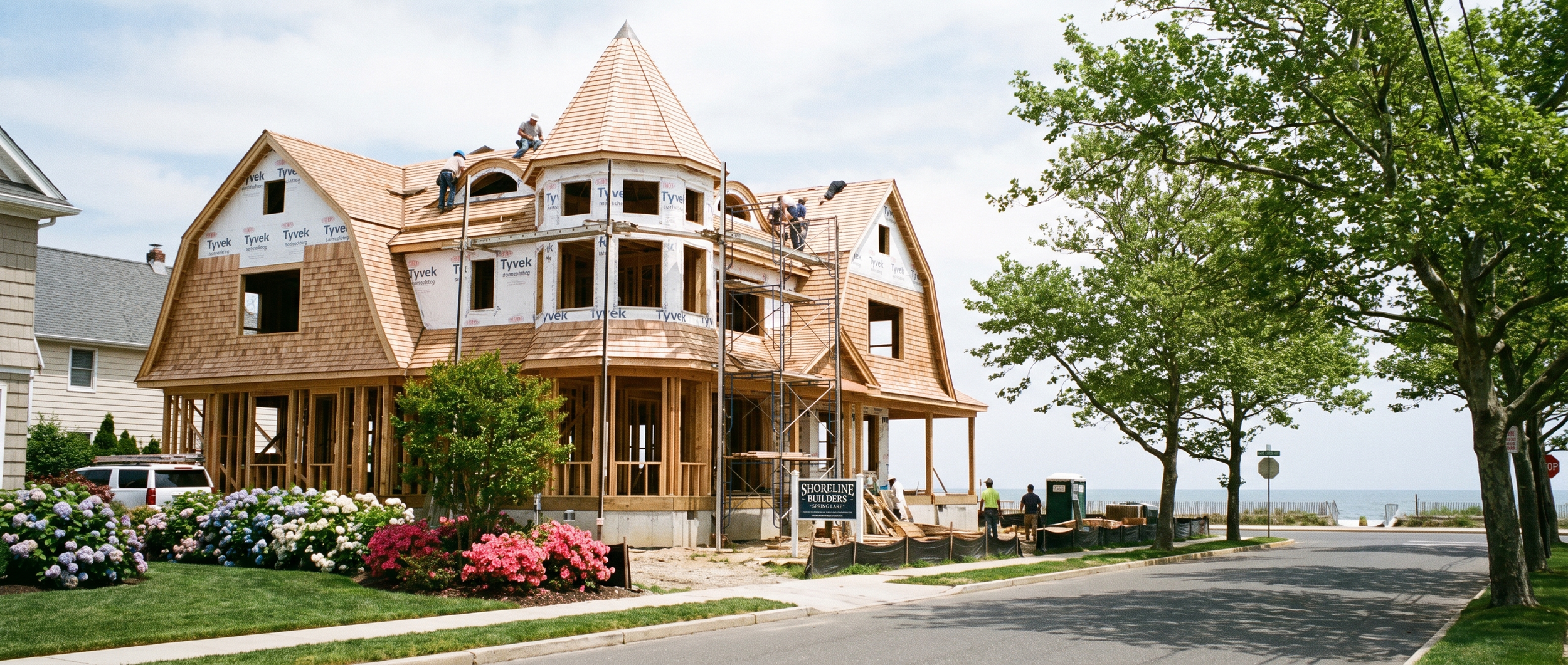
The Complications of Building in Spring Lake
It can seem like a complicated business. As a high-value part of the Jersey Shore, the market here puts pressure on land costs and design, while weather demands a certain durability from what you put in the ground. Most buyers come with an idea for a custom home, only to be met with issues over setbacks, flood rules or the time it will take to see materials through.
In the end, the challenge is not simply erecting a house; it is about putting the right one in the right spot with the proper sign off.
What Sets Spring Lake Apart
Site planning is every bit as important as the floor plan in a community like Spring Lake. Between the elevation, drainage and the architectural style of the neighborhood, there are many variables at play.
You will be dealing with a number of local factors:
Municipal zoning and setbacks – which put limits on the size, height and placement of the home.
Flood zones and drainage – having an impact on the foundation and insurance premiums.
Coastal durability – the salt and wind of the shore call for superior exterior hardware and materials.
Neighborhood character – where community standards can inform the design approval process.
For all these moving parts, from the initial site work to the final inspection, you need a builder in Spring Lake who can coordinate them.
Your Options for Building
There are several ways to go about it in Spring Lake.
1. Custom Home Construction
If complete control over the design and premium finishes are priorities, a custom home is the way to go. It suits unique lots and higher budgets, but expect to deal with the cost and timeline that comes with architectural plans and coordinating the trades.
2. Semi-Custom Construction
Some prefer the semi-custom route for more predictable pricing and quicker decisions. By modifying a tried and true floor plan, you avoid some of the design approvals a full custom project would entail.
3. Tear-Down and Rebuild
A good choice when you have an eye on a desirable location with an old house on it. This means you have to factor in demolition permits, disposal and the like before you can lay a new foundation.
4. Major Renovation or Addition
Not technically a new home build, but often the most sensible course of action for those wanting to stay put and improve the place. It does require structural planning and permits, though it may be less disruptive than starting from scratch.
Things to Consider Up Front
Is the lot even buildable?
Check for soil and easements that could be an impediment. The lot has to accommodate the size of the home you have in mind along with utility access and any necessary setbacks.
What kind of approvals will be needed?
Beyond the standard local permit review, some properties in Spring Lake demand more. An architect or builder who knows the municipal side of things will save you from unnecessary delays.
What is the cost going to be?
Factor in the labor, the type of foundation and the level of finish. In this market, site-specific work and the better quality materials you need for the coast will add to the bottom line.
How much time are we talking?
Do not be surprised if a custom project runs to many months. Design tweaks, waiting on permits or a spell of bad weather can all stretch out the schedule. ### A question of materials
In a coastal setting, the quality of your materials is paramount. You will want to consider:
Fiber cement for exterior siding and its durability.
Impact-rated windows to handle the wind while keeping energy costs down.
Composite decking for an outdoor space that does not demand much upkeep.
Stainless or other corrosion-resistant hardware to stand up to the salt air.
How we recommend building in Spring Lake
There is a tried and true way to go about it:
Start with the lot. Make sure you have buildability, proper drainage, utility access and the necessary setbacks in order.
Put the right team in place. Engage a local architect and builder; a surveyor or civil engineer may be called for as well.
Let the site dictate the design. The plan ought to suit the lot rather than the other way around.
Select for longevity. You need products for coastal construction that can take a beating from storms, moisture and corrosion.
Keep approvals front of mind. Inspections and permitting are part of the timeline from day one.
For the actual work, a general contractor will coordinate the trades and manage the materials. But if you want to see design, budget and sequencing all come together, a custom home builder is the better choice.
Mistakes people make
Not doing a lot analysis. Some buyers put pen to paper on a property without checking flood status or access, only to find out later at great expense.
Underestimating how long permits take. Delays in approval are nothing unusual. Allow for some slack in the schedule.
Finishes before structure. While interior choices are important, the foundation, framing and envelope performance must be sorted first.
Going with inland-grade products. They may be cheaper but they do not last in this environment. Do not treat durability as an afterthought.
Forgetting maintenance. A good home still needs tending. Roofing, gutters, caulking and drainage should be on the regular inspection list.
Custom, Semi-Custom or a Rebuild?
OptionBest ForProsTradeoffsCustom homeThose wanting full personalizationTotal control over the designIt will cost more and take longerSemi-custom homeWhere speed and flexibility are neededQuicker to decide onYou give up some design freedomTear-down / rebuildPrime lots with an older houseMakes the most of the locationDealing with demolition and permit headaches
If the location and long-term value are what matter, a custom or tear-down project is worth considering. For those who like predictability, semi-custom is usually the way to go.
Some FAQs on building in Spring Lake
What is the cost? It is hard to put a number on it until you factor in the square footage, the level of finish and the site work. Premium materials and the demands of coastal construction can put a dent in the budget.
Is a local builder a must? We would say yes. A builder from Spring Lake knows the township’s ways, the constraints of the lots and what is required for coastal builds.
How long is the process? Anywhere from several months to over a year once you get from design to completion, depending on the complexity and the approvals.
What works best for a coastal home? You will see a lot of impact windows, durable siding and systems that resist moisture and corrosion.
Can I put in a new house on an old footprint? Most often you can, provided you have your zoning, demolition and permit approvals in hand.
The next step
Should you be intent on building in Spring Lake, arrange a consultation with a local architect and builder to review the site. It is the only way to know for certain what your timeline and budget should be and whether the property is truly buildable. In our experience, the best outcomes for a buyer come from early planning and working with a team that has Spring Lake down to a science.
Contact us:
Email: jonathan@fathersonbuild.com
Call: (609) 489-4996
✤ ✤ ✤
Visit Our Barnegat Showroom:
455 N Main St. Barnegat, NJ 08005
Visit Our Manasquan Location:
2677 NJ 70, Manasquan NJ 08736 Suite 1B