Best Salt-Resistant Siding For Oceanfront Homes In LBI
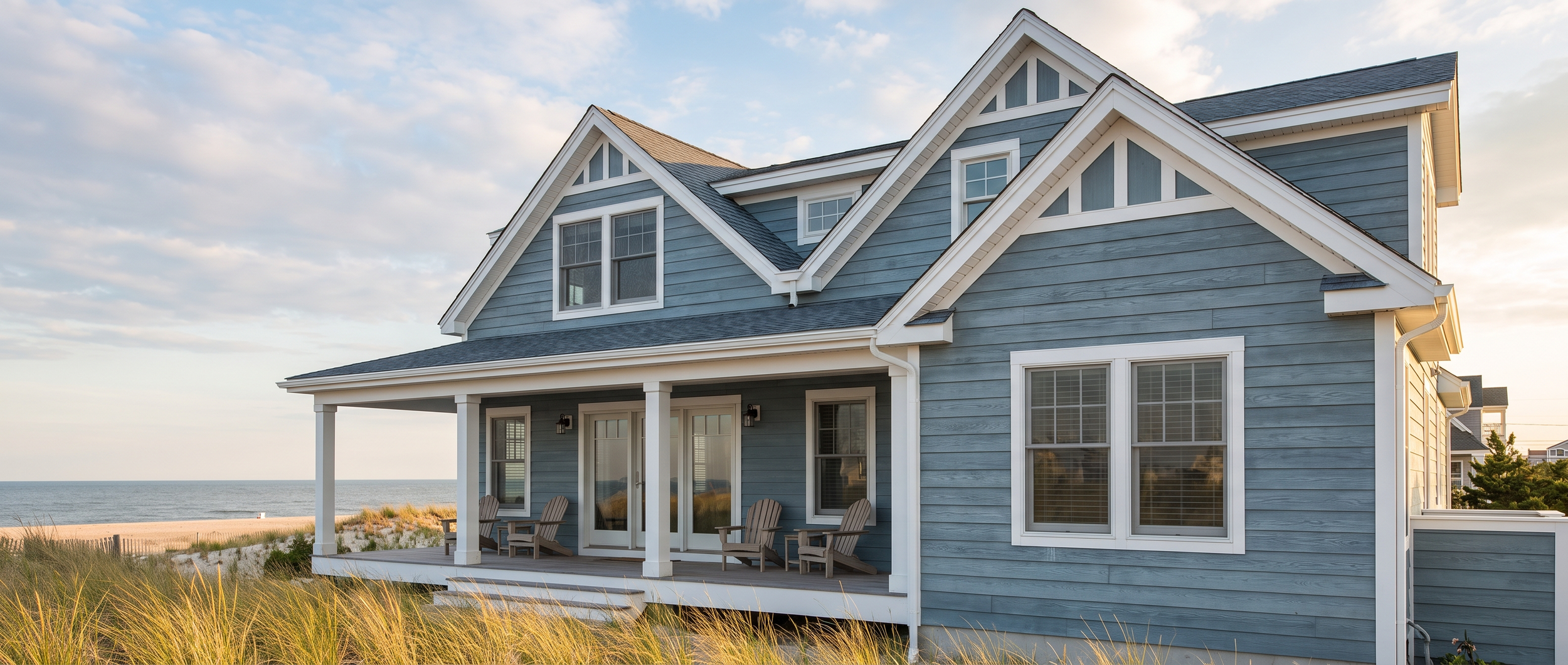
A Guide to Salt-Resistant Siding for LBI Construction: What Works for Oceanfront Homes
The best salt-resistant siding for an oceanfront home on the oceanfront is high-quality fiber cement siding. It resists rot, warping, insects, moisture, UV exposure, and salt air while providing the look of traditional clapboard or cedar shakes with less maintenance. Composite siding is another durable option, while engineered wood and cedar can work with proper sealing and regular upkeep; standard vinyl is generally better suited to homes farther from direct ocean exposure. Regardless of the material, proper coastal installation—including stainless-steel fasteners, corrosion-resistant flashing, moisture barriers, drainage, and wind-rated fastening—is essential for long-term performance.
When you are building or putting in a renovation on an oceanfront home, it is not enough to pick materials that are merely attractive. When building on Long Beach Island (LBI), the stakes are higher. The architecture has to put up with wind-driven rain, coastal UV, seasonal storms, and the unrelenting salt spray. In that environment, your choice of siding is one of the most consequential parts of the whole construction process.
The “best” salt-resistant siding isn’t what you see on a brochure; it is what can hold its own in a shoreline as aggressive as this while fitting in with the structural and permitting demands of LBI.
The LBI Difference: Beach House Siding Material
This is a narrow barrier island with a marine climate that hastens material fatigue and corrosion. If you are in Harvey Cedars, Surf City, Beach Haven, or Long Beach Township, your home is dealing with more than just salt in the air. You have to contend with elevated base flood rules, strict wind-load issues, and the particular blend of beach-house tradition and modern resilience that defines the area’s architecture. Your siding has to be able to handle all of that – rot resistance is only part of the equation. It needs to stand up to high winds and salt crystallization and keep its color under the sun.
Why Salt is the Enemy In A Coastal Home Environment
In coastal work, salt is perhaps the most destructive force at play. Wind and surf will deposit particles on your trim, sheathing, fasteners, and siding. Left to its own devices, it will corrode metal, break down paint, and wick moisture into anything porous. An untreated piece of wood will swell and decay; some vinyl will get brittle from the thermal cycling and UV; even a durable metal will rust if the fasteners or coating are not up to snuff. Something that does the job fine inland can fail early on the island. So you have to make your decision on long-term performance, not short-term savings.
Fiber Cement: The Best Siding Choice
You will hear a lot of people recommend fiber cement for coastal builds, and for good reason. James Hardie and similar products have made inroads in our shoreline communities because they are stable and versatile. The mix of cement, sand and cellulose fibers gives you something that won’t rot or burn and is hard on insects.
For an LBI home, it is a sound choice. It doesn’t warp like wood in a salt-heavy atmosphere and takes paint well. Whether you are going for a contemporary look or a classic cedar-shingle style, the lap and shingle profiles available are very adaptable.
But don’t mistake it for being impervious to salt. How it is put in is everything. You need stainless steel or other corrosion-resistant fasteners and good flashing at the roof and windows. In these oceanfront zones, the experience of the installer makes all the difference; a botched job will let down even the finest material.
Engineered Wood: Viable but Selective For Beach Houses
There is no denying engineered wood has come a long way in ten years. A top-tier product can give you the warmer, traditional feel of natural cedar without the same level of upkeep, and it is more dimensionally stable.
We would caution against using it on the most exposed oceanfront facades, though. Salt and wind-driven rain can find their way into cut edges and joints if sealing is not perfect. For those areas on LBI with direct ocean exposure, we suggest you be selective and go with a contractor who has a proven record of doing it right. Proper primers and a maintenance plan are non-negotiable.
Vinyl Siding: One Of The Top Siding Options
It is affordable and easy to live with, which is why vinyl is everywhere. But on an LBI property that is fully exposed to the elements, standard vinyl is rarely the best bet for the long haul. Newer stock may have better impact tolerance and won’t fade as easily as it used to, but you are still left with the risk of brittleness and problems with thermal expansion and strong winds. There is no denying the cost control vinyl can offer, an appeal that is hard to overlook on a large renovation or for a secondary structure. But you would be wise to be circumspect about putting it on the side of your home that has to face the open ocean or prevailing winds. Under such duress, you are apt to see recurring problems with panel movement and seam separation, not to mention storm damage.
Should you put vinyl on LBI, make sure it is premium grade and that you have used generous expansion allowances along with solid underlayment and fastening. Even so, it is more of a practical matter for a home set back from the shoreline than one in full view of it.
Cedar Shake Wood Siding: Beautiful, Traditional, and Demanding
To many an LBI homeowner, cedar shake is the aesthetic ideal for coastal architecture. The natural variation and weathered look are right at home with the island’s historic and beach-house style. Then again, if you are looking at pure durability in a salt-laden environment, cedar is not the most forgiving material.
It will do its job if you are on top of the maintenance and have had it properly installed, perhaps with a high-performance finish or factory treatment. But it is a natural product and, as such, is vulnerable to moisture, UV fading, and biological decay. You will likely find yourself refinishing and inspecting cedar on an oceanfront property more often than you would fiber cement. It is a compelling option for those who want visual character and authenticity, but you have to be realistic about the lifecycle cost and what it will demand of you.
Key Installation Nuances With Siding For Coastal Homes
A top-tier siding product is only as good as the installation when you are dealing with coastal conditions. On LBI, you have to build for wind uplift, flood elevation, humidity, and salt.
Start with the fasteners; go with stainless steel. Galvanized ones will corrode in marine air all too quickly. Your building envelope needs a first-rate moisture barrier and well-detailed flashing to keep out water intrusion, which is the usual culprit in premature siding failure when wind-driven rain gets into the laps and joints. Proper ventilation and drainage are also non-negotiable. A rainscreen assembly behind the siding gives incidental moisture somewhere to go instead of letting it pool against the sheathing. And don’t neglect to seal every penetration, from hose bibs to trim transitions, into the weather-resistive layer.
You will also see siding on many LBI homes running over open foundations or breakaway lower levels to meet flood codes. At the lower end of the structure, you have to be mindful of vertical exposure gradients and the salt the wind can drive up there.
Best Siding For Coastal Homes
When choosing the perfect exterior for coastal homes in a coastal environment, selecting the right siding material is critical for longevity and weather resistance against salt air, UV rays, and harsh weather conditions. While traditional wood siding can absorb water and deteriorate, the best siding for coastal climates is fiber cement siding or composite siding, both of which are highly resistant to salt air and offer superior impact resistance and durability. Fiber cement siding, along with other cement products, provides a siding option that won't absorb water, making exterior siding made from these materials ideal for beach houses and coastal homes. Among durable siding options, composite siding and fiber cement siding stand out as top siding options for your home’s exterior because they combine the aesthetic appeal of wood with superior weather resistance and longevity. When evaluating building materials for your home’s exterior, the right siding option ensures your beach house exterior remains protected, making fiber cement siding and composite siding the best siding choices for any coastal environment.
The Best Overall Coastal Siding Option
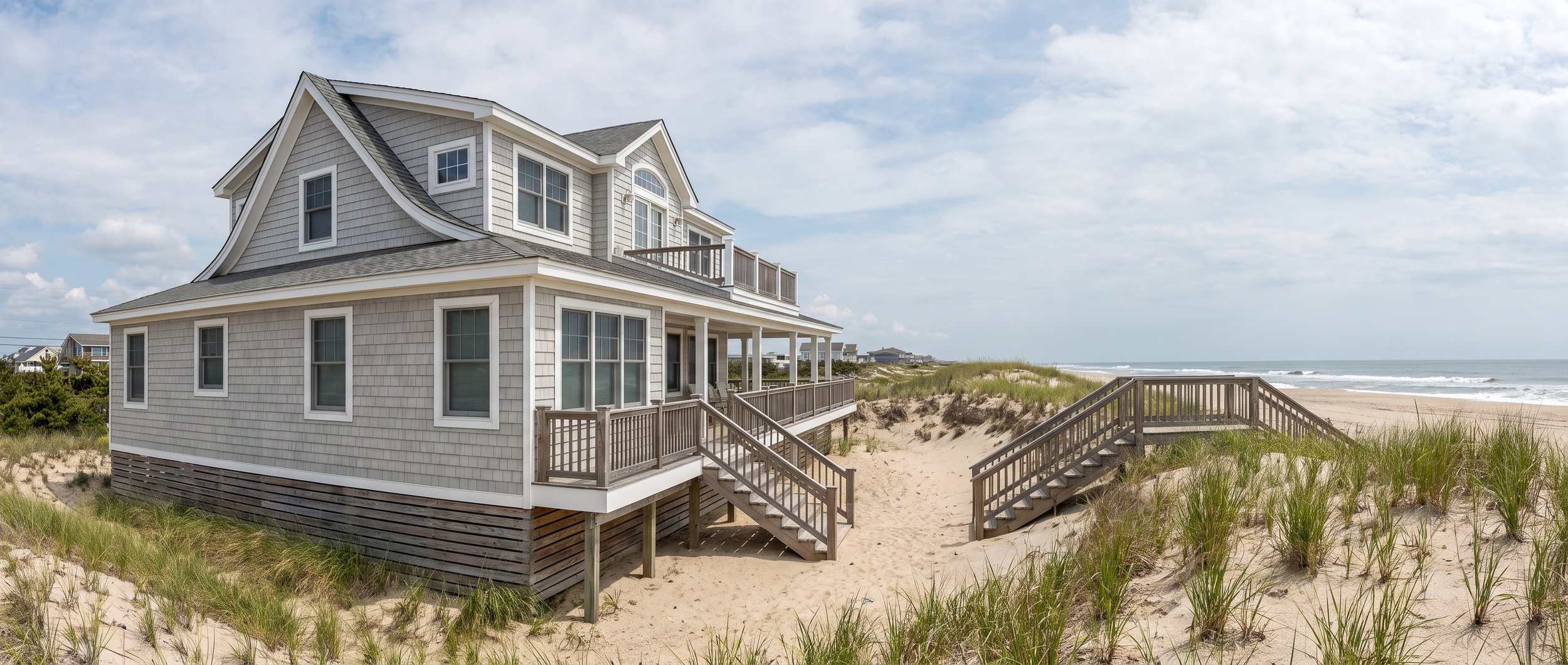
High-quality fiber cement is the strongest bet for most oceanfront homes on the island. It is a very capable material that gives you structural stability and resistance to salt without being a maintenance headache, and you can detail it to have the look of clapboard or cedar if that is what you prefer. With the right moisture management and stainless steel fasteners, it is well equipped for the harshness of LBI.
We wouldn’t say it is the answer in every case. If you are a bit farther from the ocean and want something more natural, you might opt for engineered wood or cedar and put up with the upkeep. Vinyl has its place for the budget-conscious, but it is not the best fit for direct oceanfront exposure.
When choosing a siding material for your coastal home, fiber cement siding is often a strong choice for beach properties because it can withstand the elements in coastal zones, coastal areas, and coastal regions while helping protect your coastal home from deterioration, mildew, prolonged sun exposure, and moisture damage. It’s one of the best beach house siding options thanks to its durability, design flexibility, and ability to mimic shake siding or other styles, making it a smart option for anyone comparing siding materials for coastal homes, fiber cement siding materials, and even vinyl in coastal environments when looking for the best beach house and ideal for beach house siding solution.
Final Thoughts On Ideal Siding Materials
In the end, picking siding for an oceanfront home is an exercise in environmental realism. The ocean here is as much a structural challenge as it is an asset. The projects that work are not just the ones with the toughest materials, but where the product is matched with some meticulous coastal detailing.
Fiber cement is the most dependable all-around solution in this regard, though cedar and engineered wood have their uses. Whatever you decide, the rule of thumb is to build for the ocean, not against it.