How Much Does It Cost To Raise A House On The Jersey Shore?
The Cost of Raising a House on The Jersey Shore
You might think house raising is as straightforward as jacking up the structure and putting in a taller foundation. Not so on Long Beach Island. On this slender barrier island off the New Jersey coast, you are dealing with a host of variables: flood rules, the soil, municipal demands, wind exposure, and the practicalities of coastal architecture.
For an LBI homeowner, the price tag can be all over the map. While you will see some projects come in at $40,000 to $250,000 or more, the final number is a function of the home’s size and condition, how high it needs to go, and the intricacies of the job.
In New Jersey, house-raising projects can start at around $75,000 and go much higher depending on the home and site conditions.
A homeowner elevation certificate and survey can cost about $1,500 to $2,000, and permits are often budgeted at roughly $1,400 to $1,800, before the actual lifting work even begins.
Given that LBI is flood country with its share of strict building codes and FEMA mandates, the expense is less about the act of lifting and more about the reconstruction required to meet state and local standards. In a way, you are not just asking “What does it cost to raise the house?” but “How much to put this place for life on LBI, structurally and legally speaking?”
What Makes NJ House Raising Different
The construction environment in LBI is particular. The island is long and narrow and takes a beating from coastal weather. You have to contend with storm surge, flood insurance, and the fact that townships like Beach Haven, Surf City, Harvey Cedars, Barnegat Light, Ship Bottom, and Long Beach Township can each have their own way of interpreting floodplain regulations and zoning.
Even if the goal is to get the house above the flood line, the route to get there will vary by municipality and lot. Then there is the matter of older homes. Many of the bayfront or near-ocean properties predate today’s elevation norms and will need to be reinforced before they can be lifted with any safety. It is not merely a vertical move; you are preparing the structure for salt, moisture, and high winds.
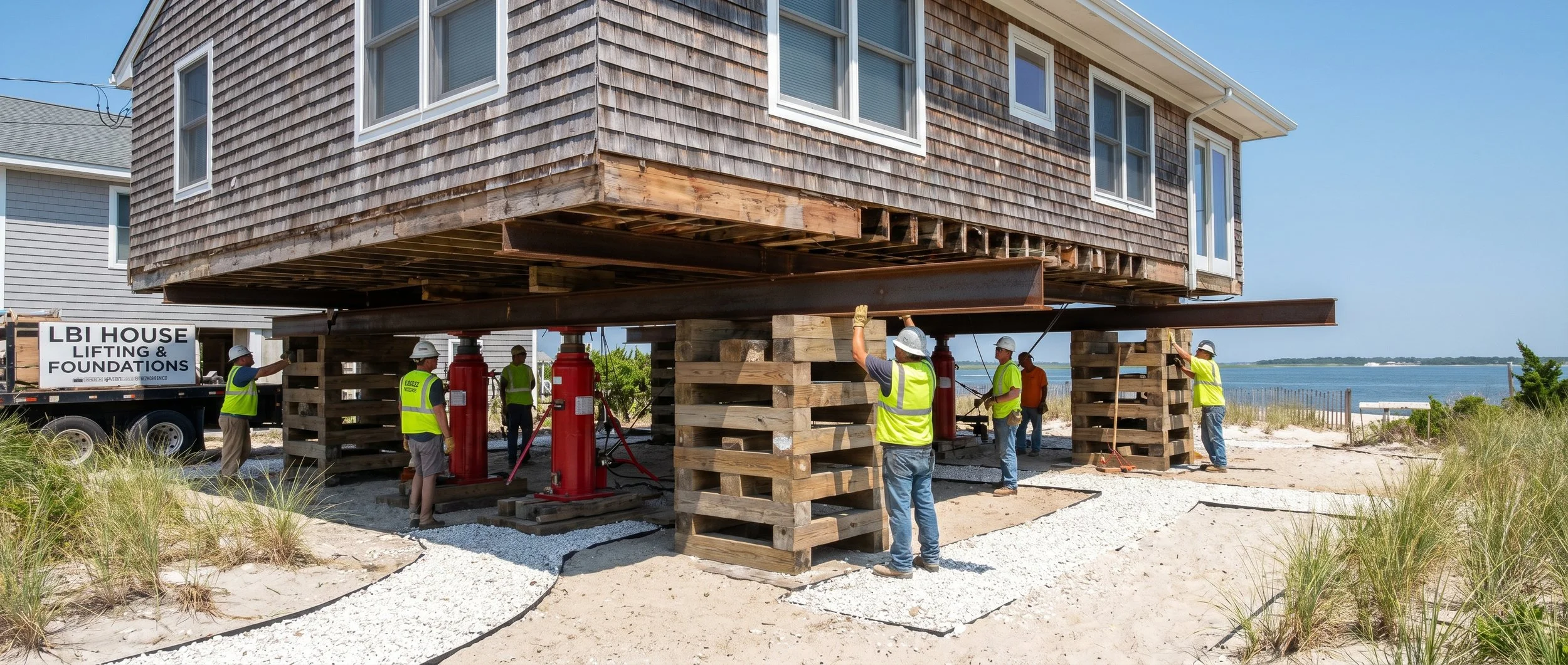
If you need to raise your home on the Jersey Shore or New Jersey Shore, the average cost for house lifting can vary widely depending on the slab, foundation repair needs, structural damage, and whether you want to replace the foundation or lift your home above the flood zone. Before you jack up a house, it’s important to disconnect utilities, inspect the structure first, and understand the costs of lifting a house, since house raising costs, lifting costs, and the cost to lift a house all depend on the scope of the job. In many cases, homeowners hire a general contractor, house raising contractors, or building movers to raise your house, add a new foundation, and complete house lifting in New Jersey safely and correctly.
Raising A House: Breaking Down the Cost
When you break down the bill for raising a house on LBI, these are the main items you will see:
1. The House Lift
Expect to pay anywhere from $30,000 to over $100,000 for the physical work. A modest single-family home will be cheaper than a multistory with masonry chimneys or complex framing.
Several things factor into the price: the square footage, the type of construction, the foundation and how many stories you are dealing with. But on LBI, access is key. If you are in a dense summer neighborhood with narrow streets or a dune-adjacent lot, maneuvering heavy equipment is no small feat and will show up in your labor costs.
2. Foundation Work
After the house is up, you have to put in a new or extended foundation. We are talking $40,000 to $120,000+ for pilings, stem walls, or a full crawlspace setup.
In the more exposed flood zones, the design has to account for hydrostatic pressure and flood venting, which means more in engineering and materials. You may find yourself needing a more robust system than what a home on the mainland would call for.
3. Utilities
Everything from the electric and gas to the water, sewer, and HVAC lines has to be taken care of before and after the lift. Depending on how much rerouting or upgrading is involved, this can run $5,000 to $25,000 and up. With some of the older houses on the island, the utility systems are not always set up for an elevation project, so you may have to do some rework to get them to code.
4. Architectural, Engineering, and Permit Costs
You can expect to put down some soft costs before a hammer is even swung. Homeowners will need to have their municipal permits in order along with architectural drawings, structural engineering plans, elevation certificates, and surveys. All told, these items can set you back $10,000 to $40,000 or more.
That is particularly true on LBI, where the towns tend to be strict when it comes to flood zone documentation, lot coverage, elevation compliance, and setbacks. You want to have a firm grasp of what the local ordinances demand. In our experience, projects are less of a headache if they are put together by professionals who know the island’s permitting culture.
5. Interior Repairs and Reconstruction While Raising A Home
Even when a job is mostly about structure, raising a house has a way of creating interior work. You may find you have to reconfigure the stairs, move an entrance, or enclose a garage. To meet the flood rules, the lower level might need a redesign. If you are adding a new living area or finishing off storage, the bill for interior repairs can go from $10,000 to well past $100,000.
Take many an LBI home: the lower level is not just for mechanicals. Zoning and flood rules permitting, there could be a laundry room, a rec room, or even a legal living space down there. When you add elevation to the equation, you may have to do a complete rethink of that layout.
What Drives the Final Costs To Raise A House?
There are several LBI-specific variables at play:
Home Size and Structural Complexity: A large beach house with its porches, decks, chimneys, and additions is going to be pricier to raise than a no-nonsense ranch. The more complicated the structure, the more labor and engineering you are looking at.
How High You Have to Go: The foundation work gets costlier the higher the home must be put. On LBI, flood regs can mean your house has to sit several feet above grade or the Base Flood Elevation. That is a difference you will see in the price.
Municipal Requirements: Every township on the island has its own building standards and inspection demands, not to mention different timelines for permits. Some are more amenable to elevation work than others, but you should not count on any of them being simple. A project in a tightly developed or flood-prone neighborhood will come under a closer eye.
Soil and Site: Barrier island soil is not always easy to work with. If the ground is sandy, waterlogged, or unstable, or if you are near the bay with poor drainage, you may need to do some extra stabilization and foundation engineering.
Raised vs. Rebuilt: A homeowner may set out to raise a house only to find once they get started that the reconstruction involved makes it something of a partial rebuild. That will push the numbers up.
Insurance and Long-Term Value
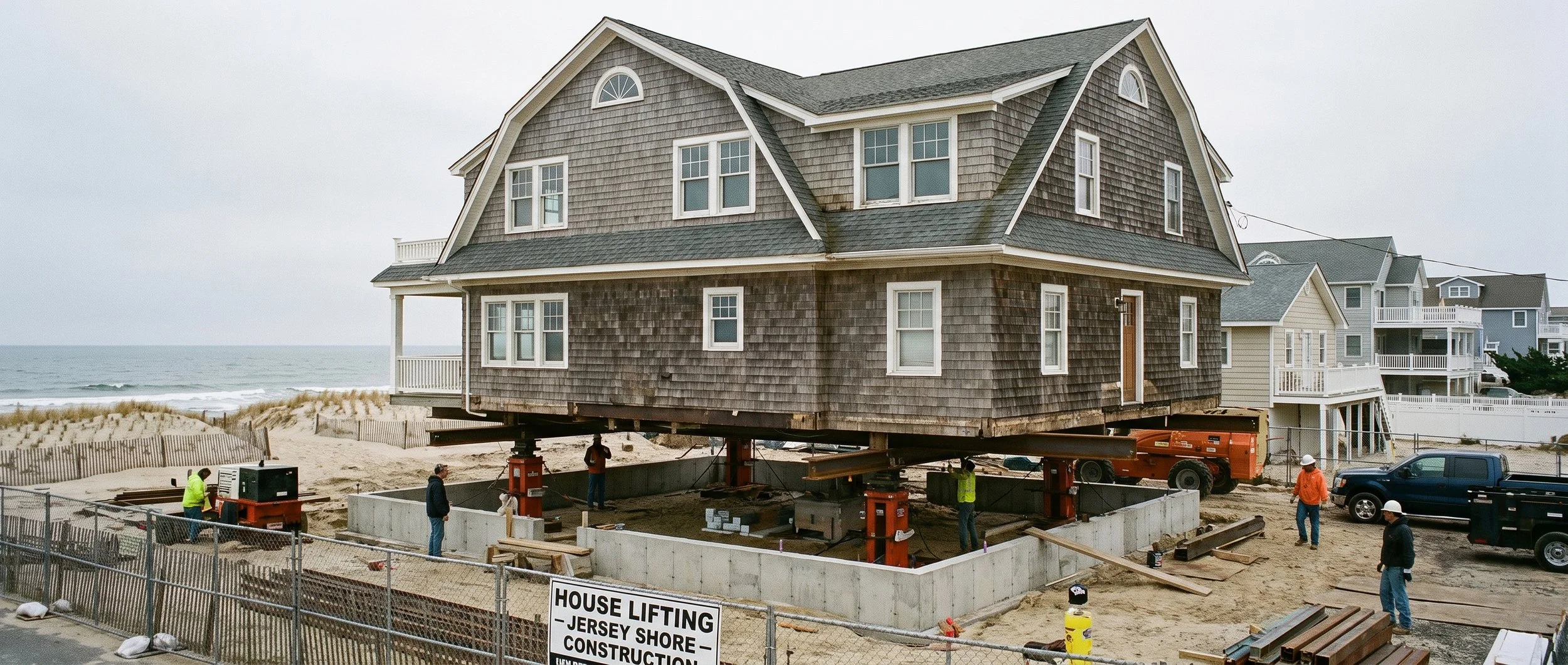
It is an expensive proposition on LBI, but the financial upside over time can be considerable. An elevated home is better shielded from storm damage and will likely see lower premiums on your flood insurance. In a market as conscious of flood risk as this one, it also helps the resale value.
Buyers here are very much attuned to FEMA compliance and storm resiliency. A properly elevated property is a far better prospect than one that is low-lying or noncompliant, especially in the more sensitive parts of the island.
Is It Worth It To Lift A House?
For most LBI homeowners, yes, provided you plan accordingly. It is a major investment, and you have to weigh the structural integrity of the home, the potential savings on insurance, and how you intend to use the place long term.
If you have a well-located, sound structure, elevating it is a good strategy to protect a coastal asset. But if the house is in need of major code upgrades or its systems are long past their prime, the tab could end up being as much as a full rebuild.
If you want to raise your home, whether as part of new construction or to reduce risk in a special flood hazard area, the process often uses hydraulic jacks to lift the structure, install a new foundation, and help protect your home from flooding and future flood damage. In Ocean County, many homeowners explore home elevations through the hazard mitigation grant program or with support from the national flood insurance program, since the size of your home, local requirements, and your insurance policies can all affect the project cost. It’s a common solution in the construction industry for properties where lifting the home is a practical way to improve resilience and reduce long-term flood exposure.
The Bottom Line
Put simply, what is the cost to raise a house on LBI? You are looking at anywhere from $40,000 to $250,000+ for the whole project, with some larger jobs running over that. The exact figure will hinge on the scope of the reconstruction, the existing structure, and which municipality you are in.
On Long Beach Island, you are not just doing construction; you are adapting to the regulatory and environmental realities of the island. Work with a contractor who has the coastal experience and knows the nuances, and you are making both a protective move and an investment in the property’s future.