
The FEMA 50% Rule for Building Requirements on Long Beach Island: What You Need to Know
Any owner of a shore house has probably had a contractor, realtor, or town official come on about the FEMA 50 rule on LBI. For those with plans to do a custom rebuild, put in a major shoreline upgrade, or simply renovate their home on Long Beach Island, you can’t afford to miss it. It is a matter of whether your project is financially sound and will get the necessary permits, let alone how it will impact your budget and design.
In New Jersey’s coastal communities, this is perhaps the single most important regulation you will deal with. It is what separates a property that can be worked on as-is from one that must be made to conform with today’s floodplain standards. For a homeowner, the difference is vast when it comes to the scope of work and the long-term value of the investment.
So whether you are putting some life back into an old beach cottage, turning a dated ocean block into a luxury retreat, or drawing up plans for a new coastal residence, knowing how this rule operates is key. And so is having a builder who knows the ins and outs of the island.
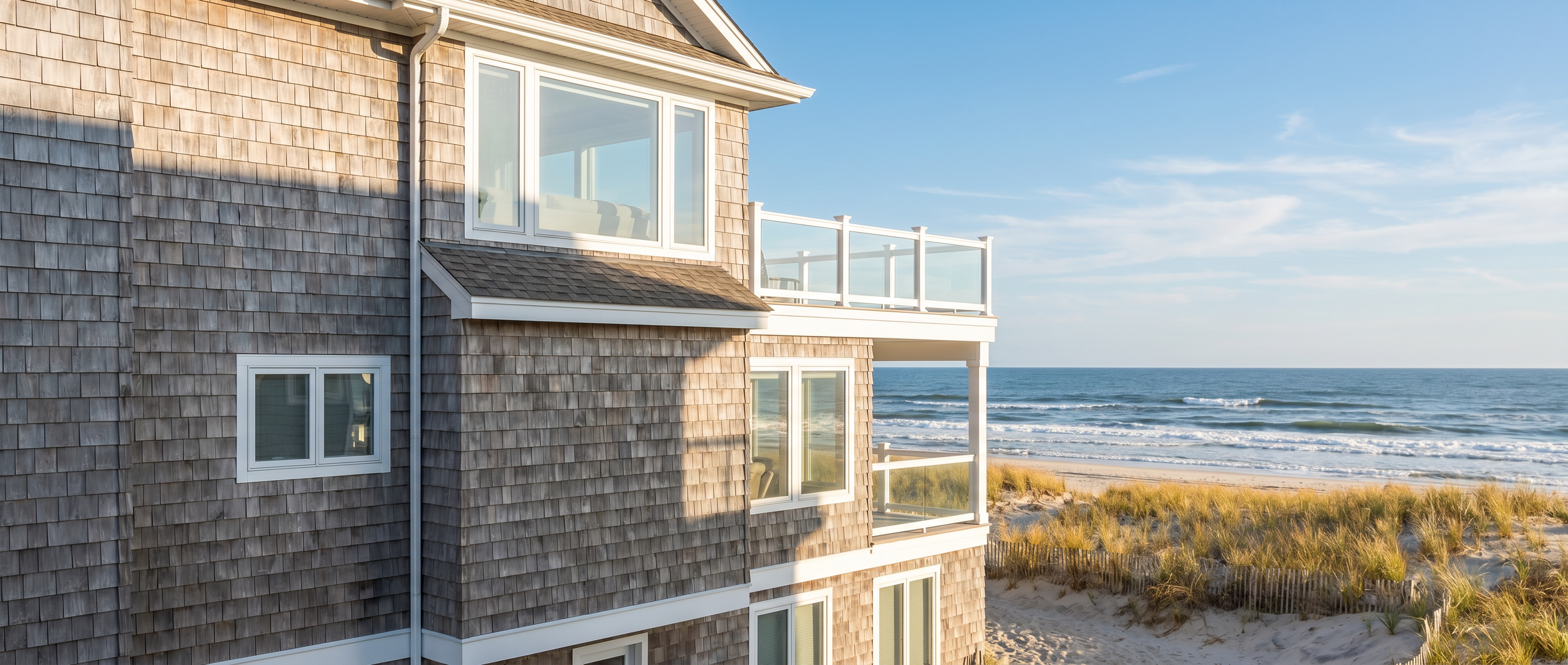
So, what is the FEMA 50% rule?
Put simply, it is a floodplain management requirement that local municipalities use to police improvements in designated flood zones. If your repairs or upgrades cost as much as 50 percent of the structure’s market value, the building is deemed “substantially improved.” Cross that line, and you are on the hook for full compliance with current regulations.
Here on LBI, where so many homes are in a FEMA zone, the consequences are real. You may find you have to elevate the home, change out your foundation system, or use materials that can stand up to flooding. Don’t think it only applies after a storm; the rule can be triggered by any number of structural alterations, additions, or even a series of projects done over time. Best to look at the numbers early in the design phase.
The FEMA 50% rule is a key part of local floodplain management that can affect flood insurance, reconstruction, and new construction in coastal areas like Long Beach Township. Under this ordinance and the local building code, if a structure is found to be substantially damaged based on substantial damage determinations, the owner may need to meet current elevation requirements and other floodplain management regulations or codes before repairing or rebuilding. These rules are tied to the Federal Emergency Management Agency and the National Flood Insurance Program, and they are based on current flood maps that identify whether a property sits in a special flood hazard area. In many cases, compliance with the floodplain management requirements can change what is allowed for reconstruction, repair, or even complete replacement of a home, so it is important to understand these rules before starting work.
How it plays out on a remodeling job
The FEMA 50 rule LBI has a way of intruding on every part of the process. You might have a clear vision for an interior overhaul until you realize the tab is going to tip past the 50 percent mark. Suddenly, what was a straightforward renovation demands some serious compliance work.
Let’s say your renovation budget is running close to half the assessed market value of the home. The municipality is likely to call for:
Raising the structure to the base flood elevation
A reworked foundation
Breakaway walls or other compliant enclosures
Flood-resistant finishes in the lower levels
An update to your mechanicals and plumbing
More paperwork from your engineers and architects
That is the kind of costly surprise you want to avoid, which is why you should be working with a team that is well-versed in LBI regulations.
Why it matters on the island
Long Beach Island is not like the mainland. Between the zoning and the exposure to the water, the construction landscape is its own beast. Many of the older homes in our neighborhoods have been tinkered with enough times that a piecemeal approach is no longer the answer.
The rule often forces the issue when you are weighing the economics of a remodel versus a tear-down. You may set out to modernize the kitchen and baths, but once you factor in the flood requirements, a complete custom rebuild makes more sense.
Many homeowners here opt for a new build on LBI because it gives them better flood resilience and energy efficiency, a more thoughtful use of the lot, and views to enjoy without the upkeep. It also allows for a design that is all of a piece. An experienced local builder will be able to tell you if you are getting a better return on your money by starting from scratch.
At the end of the day, the FEMA 50 rule comes down to a simple equation: the market value of your structure against the price tag of the work you want to do. You might think the math is straightforward, but in the real world, the calculation has more nuance to it than most homeowners anticipate.
As a rule of thumb, market value for a building does not factor in the land; it is all about the structure. And when you add up the cost of what you are proposing – labor, materials, permits, subcontractors, and the like – you have to be careful. Some municipalities will look very closely at the project as a whole to see if you have crossed a line. A renovation that looks unassuming on paper could well be deemed a substantial improvement if there is any structural work or pricey additions involved. So it is best not to assume you are safely under the threshold without some professional advice.
The Importance of Design and Planning
Here on Long Beach Island, good design is strategic as much as it is aesthetic. You have to contend with flood exposure and the way things are done in a coastal environment. A home can be put together to meet the requirements and still give you the open floor plan and indoor-outdoor feel you are after, with the kind of finishes you want.
A competent builder in the area will have these things in mind from the get-go:
How the site is graded and elevated
What your foundation options are
The demands of the municipal code and material durability against salt air
Where to put the mechanicals for easy access
Making sure the lower levels are compliant while not sacrificing living space
It is important to sort out these details before the architect puts the final stamp on the plans. With the right people on your side, you can make the most of your space without compromising on the vision or breaking any rules.
To Renovate or Rebuild?
There are times when remodeling is the sensible thing to do for an LBI homeowner. Provided the bones of the house are sound, and you are not going to hit the threshold, it is a cost-effective way to update your style and comfort.
But the FEMA 50% rule will tell you when it is time for a bigger investment. If you are looking at a fully custom luxury property, or if the existing layout is inefficient, or the home has taken its share of storm damage, rebuilding is often the answer. It is also the way to go when compliance costs would make a renovation absurd. A new build lets you coordinate your elevation, garage, and outdoor amenities in a way that simply isn’t possible with retrofitting an old structure, resulting in a more valuable asset in the end.
Make the Right Call With a Local Builder
Any homeowner would be wise to work with someone who has a firm grasp of the FEMA 50% rule. Since every municipality can be different in how they read the floodplain regulations, local knowledge is key. A builder who knows Long Beach Island will be able to head off problems before they turn into delays, and he can work with your engineers and architects to get the permits sorted.
The one you choose should be able to walk you through feasibility studies and pre-construction budgeting, as well as help with high-end finishes that can stand up to the coast. For a major shore renovation or a new luxury home, that sort of expertise goes a long way in protecting your timeline and the home’s performance down the road.
In the End
Don’t let it be seen as some regulatory technicality. It is what dictates how homes here are repaired and reimagined. If you are thinking of putting in a custom home or doing something significant with your current place, you need to understand the rules early on to avoid making expensive errors.
In a market where you have to balance waterfront value with flood resilience and quality architecture, proper planning is non-negotiable. Whether you are modernizing an old shore house or starting from scratch, an experienced builder can ensure you are making the right decisions. When in doubt, talk to a local pro who can show you how the rule impacts everything from design to construction and make the whole process a success.
