
The Best Storm-Proof Building Materials for LBI Homes (NJ)
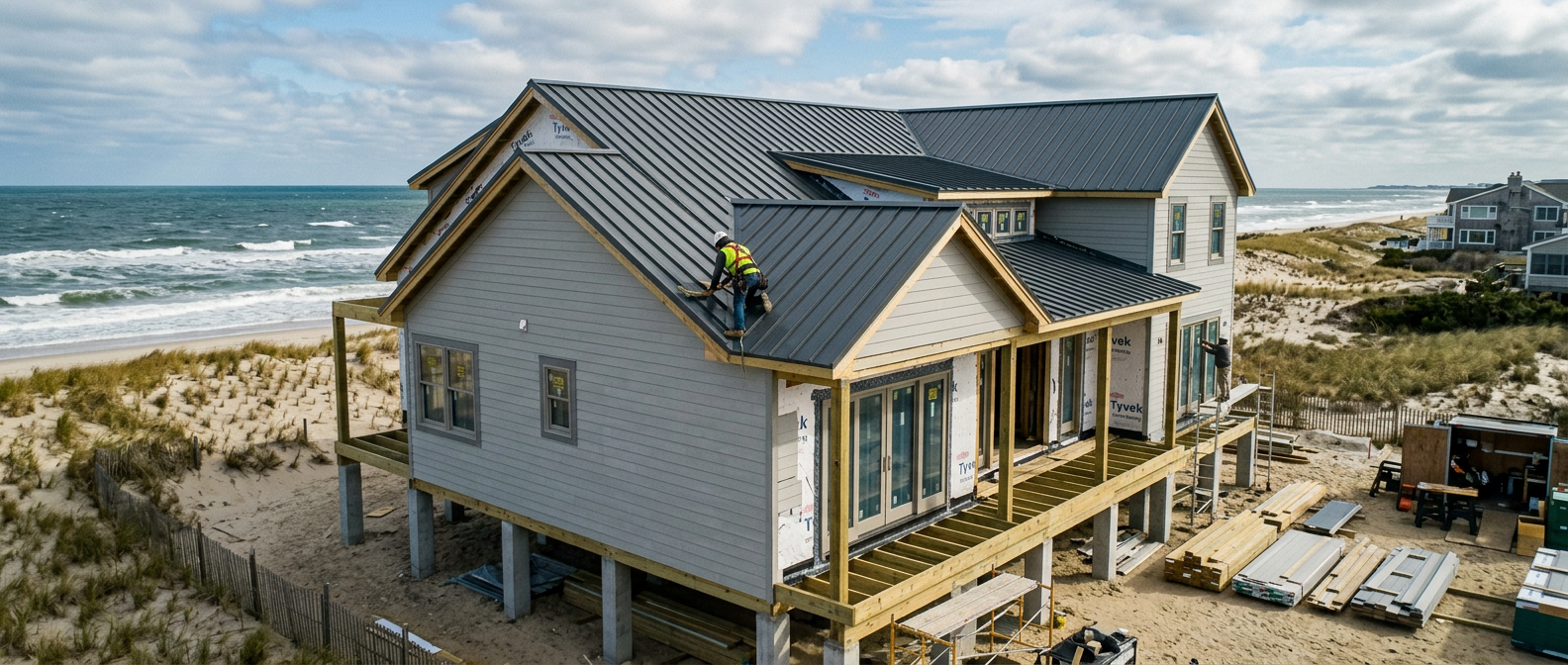
Homeowners and builders on the Jersey Shore know that when you are putting up a new home or renovating an existing one on Long Beach Island, you can’t skimp on materials. To be truly storm proof, you need impact-resistant glass, fiber cement siding, metal roofing and well-treated lumber. On top of that, you will want to make sure your structural system is sound with things like hurricane straps, tie-downs and flood-resistant assemblies.
For those of us on LBI, selecting the right storm proof building materials NJ has to offer is about more than mere durability. It is what you have to do to put up with hurricanes, keep flood damage to a minimum, stand up to salt air corrosion and satisfy the coastal building codes in place for our properties.
Why building material is important on Long Beach Island
LBI is in a high-risk part of the coast. You have the Atlantic Ocean, nor’easters, tropical systems and storm surge to contend with. Most property owners here and across the New Jersey Shore found out the hard way after Superstorm Sandy that your average residential materials don’t hold up to the wind loads, driven rain and moisture.
Hurricane resilience has to come from the building envelope and structure. With a coastal home you aren’t just trying to “withstand weather,” you are looking to:
Stop flying debris in its tracks
Keep water out from both the wind and any flood surge
Head off deterioration from the salt
Get in line with FEMA and coastal building codes
Give your waterfront or elevated home a longer service life
Put simply, the proper materials are there to safeguard the house and your investment.
What NJ Homeowners Should Be Looking For
If you are in the market for storm proof building materials NJ has to offer, look for products with impact resistance, strength and good moisture control.
1. Impact-Rated Windows and Glass
There is no better weak point in a coastal house than a window. If standard glass gives way to a piece of debris, the resulting pressure and rain can spell trouble for your roof and walls.
You want impact-resistant glass and impact-rated windows because they are made to take a hit from high-speed debris without shattering. They will stay put even if they crack, which limits interior pressurization and water penetration. In these parts of the country, they are the bedrock of hurricane-resistant construction. Let the wind in and the damage compounds fast.
2. Fiber Cement Siding
We see fiber cement siding as a top pick for the coast. It does a much better job of fending off the elements – moisture, wind, insects and salt – than old-fashioned wood.
It is a practical long-term fix for a beach house. It has the dimensional stability to handle temperature changes and won’t rot or swell like wood does under humid, salty conditions. And where vinyl might not cut it in high-wind zones, fiber cement is far more durable.
3. Metal Roofing
For a coastal property, metal roofing is hard to beat. It sheds water very well and has a good deal of wind resistance.
You get fewer seams to worry about than with some conventional systems and a roof that will last in a marine environment. Do the job right with the proper flashing and fasteners and you have a solid upgrade for hurricane resilience on LBI and the rest of the shore.
4. Treated Lumber for Framing
Any framing material left to the elements will eventually go if it is not suited for the coast. That makes treated lumber a must for exposed structural work, substructures and decking on an elevated home.
But don’t forget to use connectors and fasteners that won’t corrode. You don’t want rust to compromise the structure before the wood has a chance to fail.
5. Hurricane Straps and Tie-Downs
Your exterior can be as storm-resistant as you like but it means nothing if the house isn’t anchored. Hurricane straps and tie-downs are what tie the roof, foundation and walls together in a continuous load path.
They are there to prevent catastrophic separation and curb roof uplift in a gale. In many house building projects on Long Beach Island, meeting the wind-load requirements with these components is not something you can leave to chance. You will find coastal contractors put these systems to good use to stay in line with the code and for the sake of long-term durability.
6. Flood-Resistant Materials
If you have a home in a flood zone, be it an elevated structure or one close to a bay or inlet, there is no room for compromise below the base flood elevation. Flood-resistant materials are a must.
We see the best results from:
closed-cell insulation
concrete or masonry, as the case may be
metals that are marine-grade or won’t corrode
subfloor systems and wall assemblies that can take moisture
They are put to work in breakaway walls, utility enclosures and other lower-level spaces because they stand up to water intrusion, dry out fast and keep mold at bay.
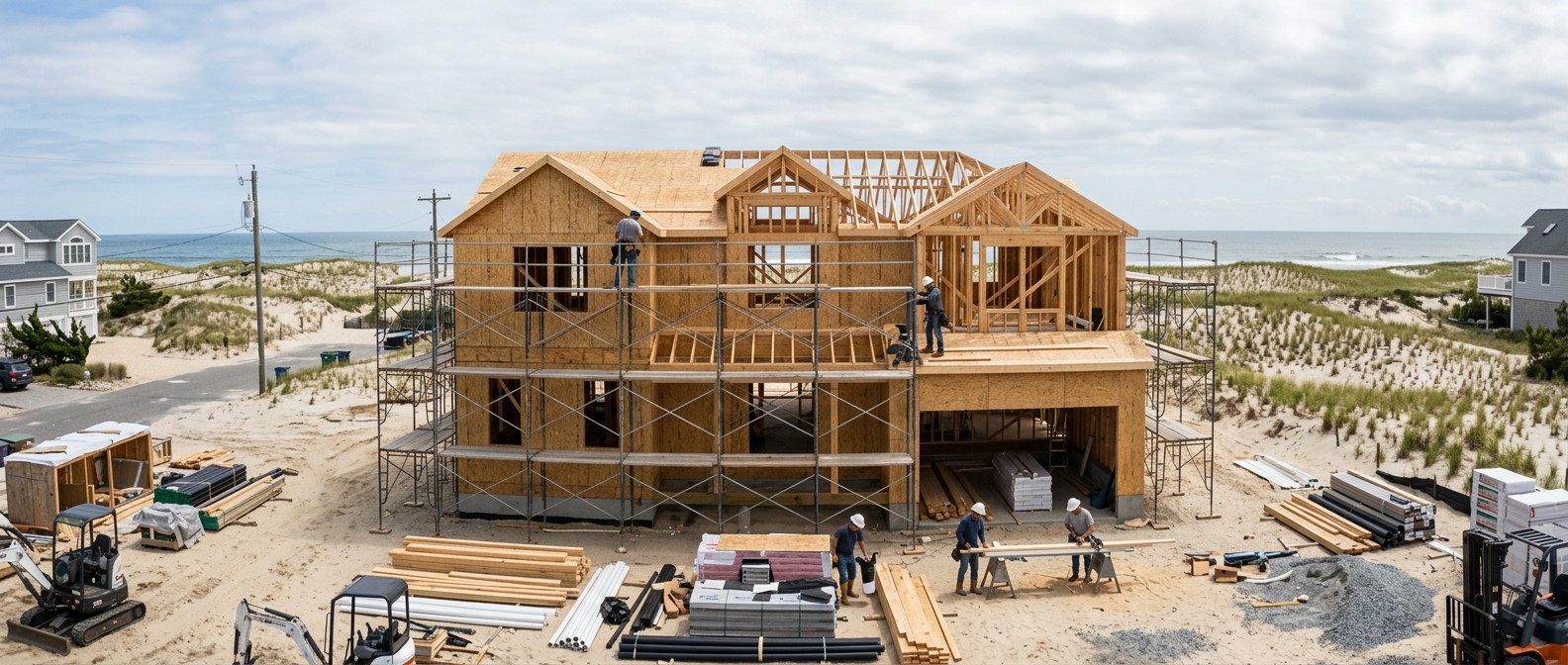
Why These Building Supplies Hold Up in Coastal Conditions
Coastal properties have a way of failing for very predictable reasons – wind, water, salt and the passage of time. The top stormproof materials are engineered to deal with all of them.
High Winds
A hurricane can put up enough force to tear off your siding, crack the glazing or even lift the roof. Conventional products don’t stand a chance, but metal roofing, fiber cement siding and impact-rated windows will.
Driving Rain
Often the wind-driven rain does more damage than the storm itself by working its way into small openings in the building envelope. You need high-quality weatherproofing and cladding to stop it, along with proper flashing.
Flooding and Saltwater
Standard framing, insulation and drywall are finished when floodwater gets in. Saltwater makes matters worse by hastening corrosion. For homes subject to tidal or surge flooding, you need connectors and materials that are truly resistant.
Long-Term Salt Air
Out here on the Atlantic the air is laced with salt and it will eat away at your finishes, joints and fasteners. To stave off premature failure you want coastal-grade materials and hardware that is stainless or hot-dipped galvanized.
Staying Compliant on LBI
It is not just about making a resilient home, you have to be in compliance. Coastal building codes in New Jersey and on Long Beach Island are strict when it comes to structural anchoring, flood elevation and wind resistance.
Builders have to factor in the likes of FEMA floodplain rules, wind zone classifications, and the need for breakaway walls in certain enclosures. A good local architect or builder will know how to pair your material choices with what the code calls for, which is key for any new elevated home or renovation in a regulated area.
Hurricane-Resistant Construction: Best Practices on LBI, New Jersey
Poor installation will make even fine materials underperform. So hurricane-resistant construction is as much about craftsmanship as the product you put in the ground.
Experienced contractors on the coast will tell you to:
put in impact windows with the right sealants and flashing
reinforce where the roof meets the wall with hurricane straps
go with a metal roofing system made for high winds
see that every joint and penetration has its weatherproofing details specified
elevate where the regulations say you must
In this part of the country, the details are everything.
Questions for LBI Homeowners
Before you break ground on a project, you should be asking:
Are we in a FEMA flood zone?
What does the location demand in terms of wind load?
Will the roofing and windows hold up to coastal code?
Have tie-downs and hurricane straps been factored into the design?
Is the lower level built with materials that can handle a flood?
Asking these sorts of questions makes sure the property is fit for life at the beach and not just for show.
Final Thoughts On The Best Building Materials
The wiser approach for a Long Beach Island home is to put together a strategy with impact-resistant glass, metal roofing, treated lumber, fiber cement siding and the like. Add in your hurricane straps and flood-resistant components and you have a package that can defend against the driving rain, the wind and the salt air. Done right, you have a home that is safer and in full compliance with the realities of the Jersey Shore.
For a new build or a renovation on LBI, we suggest talking to a local builder who knows coastal construction from the ground up and is well versed in FEMA requirements. He can help you get the design and materials right so you are ready come next storm season.
When planning storm-resilient building projects on Long Beach Island, sourcing quality building materials is the critical first step. Whether you are tackling remodeling jobs or new residential construction, working with a trusted materials supplier who understands coastal conditions makes a massive difference. A reliable supplier will maintain a robust inventory of specialized construction supplies specifically designed to withstand harsh weather. In the broad scope of nj building and coastal construction projects, the exact material used can mean the difference between a home that survives a hurricane and one that requires extensive repair.
For both commercial and residential building efforts, local codes often dictate the specific building and construction methods required on the island. Builders rely on heavily treated plywood, impact-resistant exterior finishes, and waterproof membranes to protect a structure's envelope from driving rain and flooding. Even interior choices, like using durable tile on the ground floor rather than carpet, play a major role in minimizing future damage. By prioritizing premium construction materials and partnering with a knowledgeable local building expert, property owners can ensure their LBI homes are engineered for long-term safety.
